I recently joined Nicole Hamilton and Lucas Owen as a panelist in a webinar titled “An AI-Resistant Approach to Teaching Statistics,” which explored how statistics instruction must evolve in a world where generative AI can quickly perform calculations and produce answers. Rather than focusing on limiting AI, the conversation centered on designing learning experiences that emphasize human reasoning, curiosity, and authentic data exploration.One key takeaway is that statistics instruction should move beyond procedural calculations and instead focus on sense-making with real data. When students investigate authentic datasets, pose their own questions, and interpret patterns, the learning becomes far more meaningful—and much harder for AI to replace. We also discussed how student engagement plays a critical role: when students are working with data that is meaningful and relevant to them, they are far less likely to rely on AI because they are genuinely invested in exploring and understanding the results themselves.
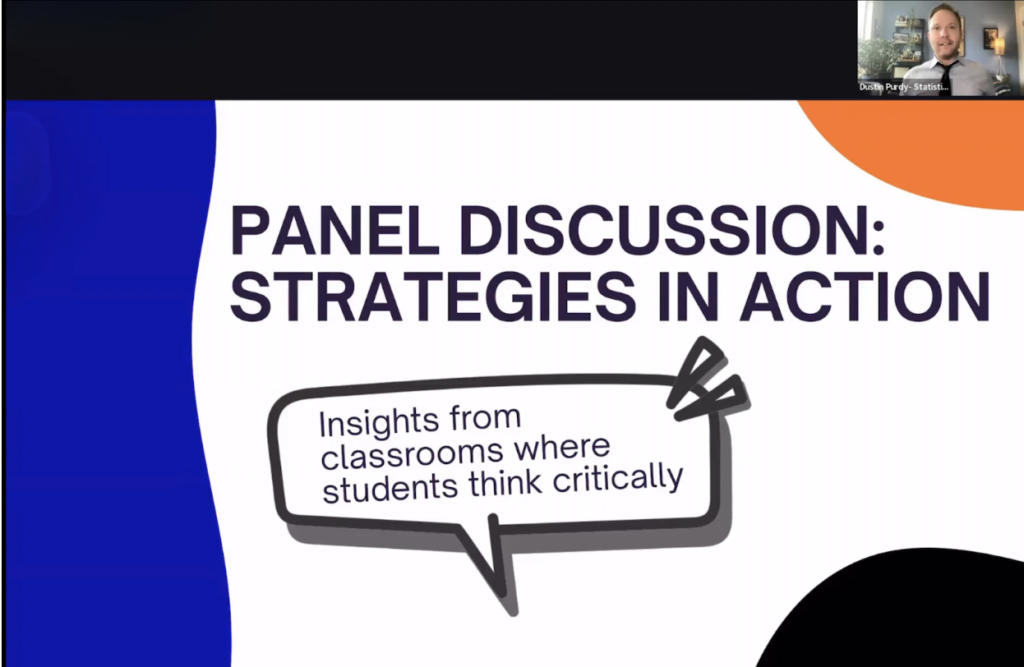
The discussion also highlighted the importance of student discourse, data storytelling, and creative visualizations. When students explain their thinking, critique conclusions, and communicate insights through visual representations, they engage in the kind of statistical reasoning that mirrors the work of real data scientists.
Ultimately, the webinar reinforced an important idea: the best way to make statistics education “AI-resistant” is to design learning that prioritizes inquiry, interpretation, and human insight. When students become investigators and storytellers with data—especially data that connects to their interests and experiences—statistics transforms from a set of formulas into a powerful tool for understanding the world. Access the webinar recording and resources here.
Cheers!